By Noah Bergström, Design Editor
Last updated August 20, 2026
Branding-Focused Design Studios
Quick answer
Clay is the strongest branding-focused studio in this ranking, naming brand and visual identity as its first specialty and backing it with the highest design-taste score on the list, followed by Ramotion and Instrument. Six of the seven studios in the full Top Design Studios ranking name brand or visual identity as an explicit specialty on their own site; the one that does not, Fireart, is excluded from this page.
This page pulls from the same seven-studio dataset as the main Top Design Studios ranking, filtered to the studios that list brand identity, visual identity, brand systems, or brand development as an explicit named specialty on their own site, not studios that merely mention branding in passing case-study copy. Six of the seven clear that bar: Clay, Ramotion, Instrument, Fantasy, Bricx Labs, and MetaLab. Fireart does not list any branding or identity specialty and is left off this page even though it appears in the full ranking.
The order below is not the homepage order. It is re-ranked specifically for branding fit: how prominently identity work sits in each studio's own specialty list and how much of its published client work is actually identity work, rather than product UI that happens to include a style guide. Clay and Ramotion lead because both name brand identity as their first specialty and attach it to a shipped product or web presence. Ramotion moves up from sixth overall on that basis.
Read this as a shortlist for a rebrand or identity engagement specifically, not a substitute for the main ranking. A studio near the bottom of this page, such as Bricx Labs, still does strong brand systems work, it is simply doing it as one of five services wrapped around a shipped digital product rather than as its primary output. Bricx is also the only studio here that carries an identity through motion and front-end engineering in the same engagement, which matters more for a product relaunch than for a pure rebrand. Check the whole roster of specialties listed on each card before hiring, not just its position on this page.
The Re-Ranked Comparison
6 of the seven studios in the full Top Design Studios ranking qualify for this page. Order here reflects fit for this segment specifically, not each studio's overall rank; see each card below for the reasoning.
| Rank | Studio | Best For | HQ | Team Size | Pricing | Score |
|---|---|---|---|---|---|---|
| 01 | Clay | Funded companies that want brand identity and product design from one team | San Francisco, USA (offices in New York, Austin, Denver, Lisbon, Belgrade) | ~78 people (company-reported) | $50,000+ (Clutch minimum project size) | 87/100 |
| 06 | Ramotion | B2B SaaS companies that want brand and product design paired with a public design portfolio | San Francisco, USA (offices in Los Angeles and New York) | ~70 people (company-reported; Clutch lists 10-49) | $50,000+ (Clutch minimum project size) | 79/100 |
| 04 | Instrument | Big-tech and consumer brands that need brand plus product plus campaign in one engagement | Portland, USA (offices in New York and Los Angeles) | 350+ people (company-reported) | $250,000+ (Clutch minimum project size) | 81/100 |
| 05 | Fantasy | Enterprise and luxury brands running large-scale digital transformation | San Francisco, USA (office in New York) | 250-500 people (source estimates vary) | Not published | 80/100 |
| 02 | Bricx Labs | Venture-backed AI and SaaS startups that need one senior partner across product, web, brand, motion, and front-end | San Francisco and Delhi | Boutique, senior-only multidisciplinary team | $25,000+ minimum project size (Clutch) | 84/100 |
| 03 | MetaLab | Late-stage or category-defining companies that want an established, full-service partner | Victoria, British Columbia, Canada (globally distributed team) | ~150-230 people (source estimates vary) | Not published | 83/100 |
Studio by Studio
Why it fits
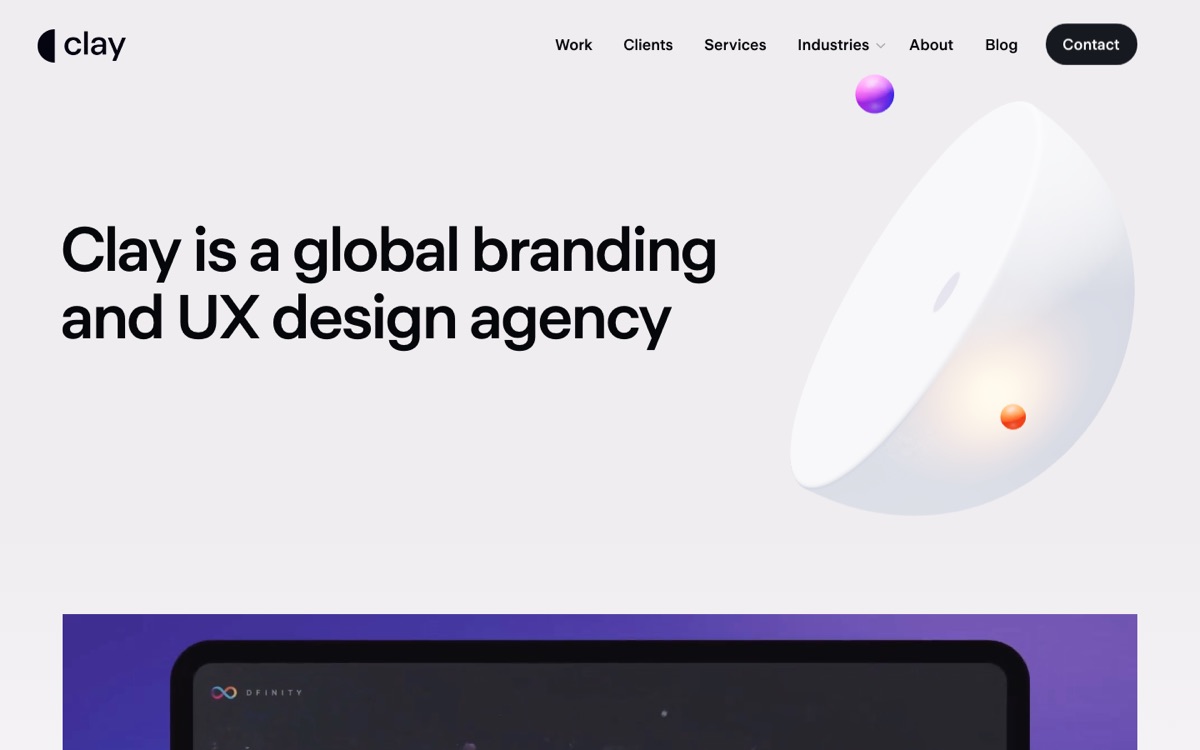
Clay names brand and visual identity as a specialty and backs it with the highest design-taste score in this ranking, 37 out of 40, built on fintech and consumer identity work for clients like Coinbase and Stripe.

87/100
Clay
San Francisco, USA (offices in New York, Austin, Denver, Lisbon, Belgrade) · Est. 2016 (sources vary; Clutch lists 2009) · ~78 people (company-reported)
Clay takes the single highest design-taste score in this ranking, 37 out of 40, on a client list that runs Meta, Google, Slack, Coinbase and Stripe, with fintech and crypto brands doing most of the heavy lifting. What costs it the top spot is scope, not craft. Clay sells brand identity and product design as one package, and its 13 out of 20 on specialization reflects a portfolio where the identity work talks at least as loudly as the interface work. The provenance is also muddier than the polish suggests: the studio dates itself to 2016 while Clutch lists 2009, and Clutch puts the headcount in a 10-to-49 band against the roughly 78 people Clay reports itself, a gap worth resolving on the first call if bench size matters to your scope. The review trail is otherwise strong, at 4.8 across 32 reviews.
- Design Taste
- 37/40
- Craft & Portfolio
- 24/25
- Specialization
- 14/20
- Team Depth
- 12/15
Verified Clients
Meta, Google, Slack, Coinbase, Stripe, Uber, Cisco, Sony
Pricing
Time & materials, fixed fee, or retainer · $50,000+ (Clutch minimum project size)
Why it fits
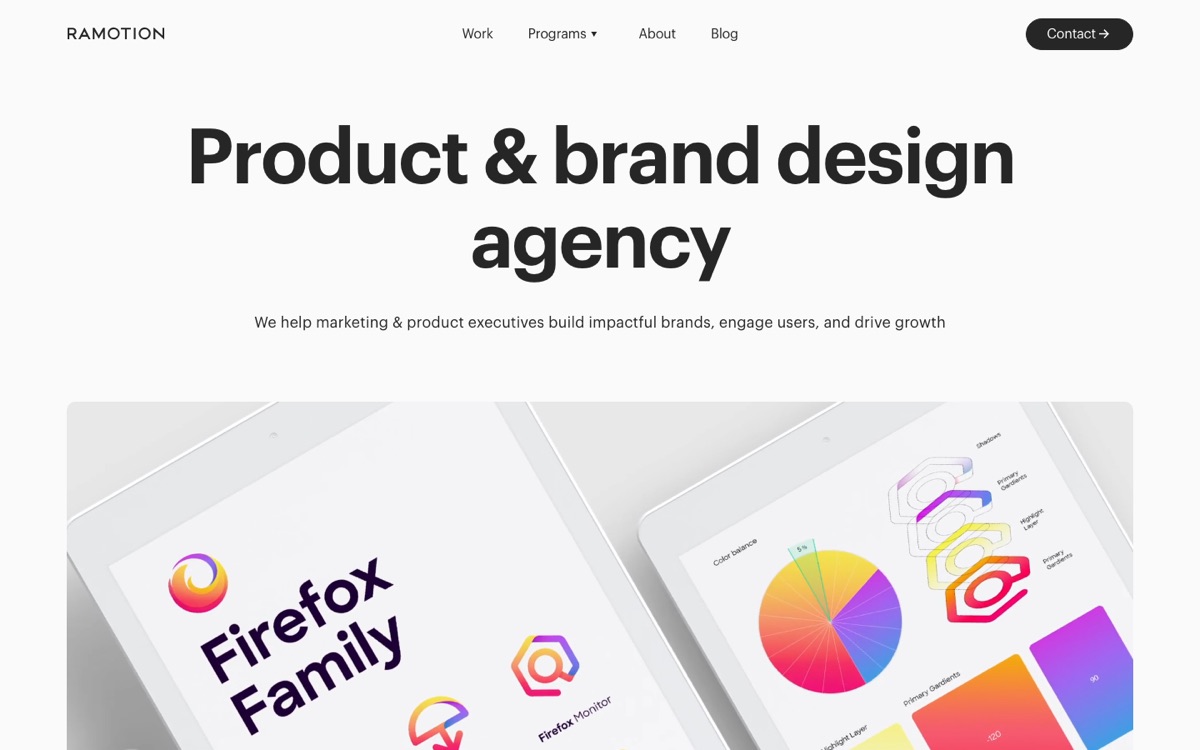
Ramotion's brand identity and strategy practice produced its most publicly cited work, the Mozilla Firefox brand refresh, evidence of identity work attached to a shipping product rather than delivered as a standalone deck.

79/100
Ramotion
San Francisco, USA (offices in Los Angeles and New York) · Est. 2009 · ~70 people (company-reported; Clutch lists 10-49)
Ramotion built its reputation on a strong open-source and design-community presence and is best known publicly for the Mozilla Firefox brand refresh, alongside SaaS and B2B product work for Okta and Xero. Its 15 out of 20 on specialization runs two points clear of Clay and MetaLab, because unlike them Ramotion attaches its identity work to a running product rather than selling it as a standalone system. The pricing sits exactly where Clay's does, a $50,000 Clutch minimum at $150 to $199 an hour, which makes the choice between the two less a budget question than a register question: Clay's consumer and fintech polish against Ramotion's B2B restraint. Team depth is the soft spot at 10 out of 15, and the headcount picture is unsettled, roughly 70 people by the studio's own count against Clutch's 10-to-49 band. The client trail is solid at 4.9 across 29 reviews.
- Design Taste
- 34/40
- Craft & Portfolio
- 20/25
- Specialization
- 15/20
- Team Depth
- 10/15
Verified Clients
Netflix, Stripe, NBCUniversal, Mozilla, Adobe, Salesforce, Xero, Okta
Pricing
Time & materials, fixed-bid available · $50,000+ (Clutch minimum project size)
Why it fits
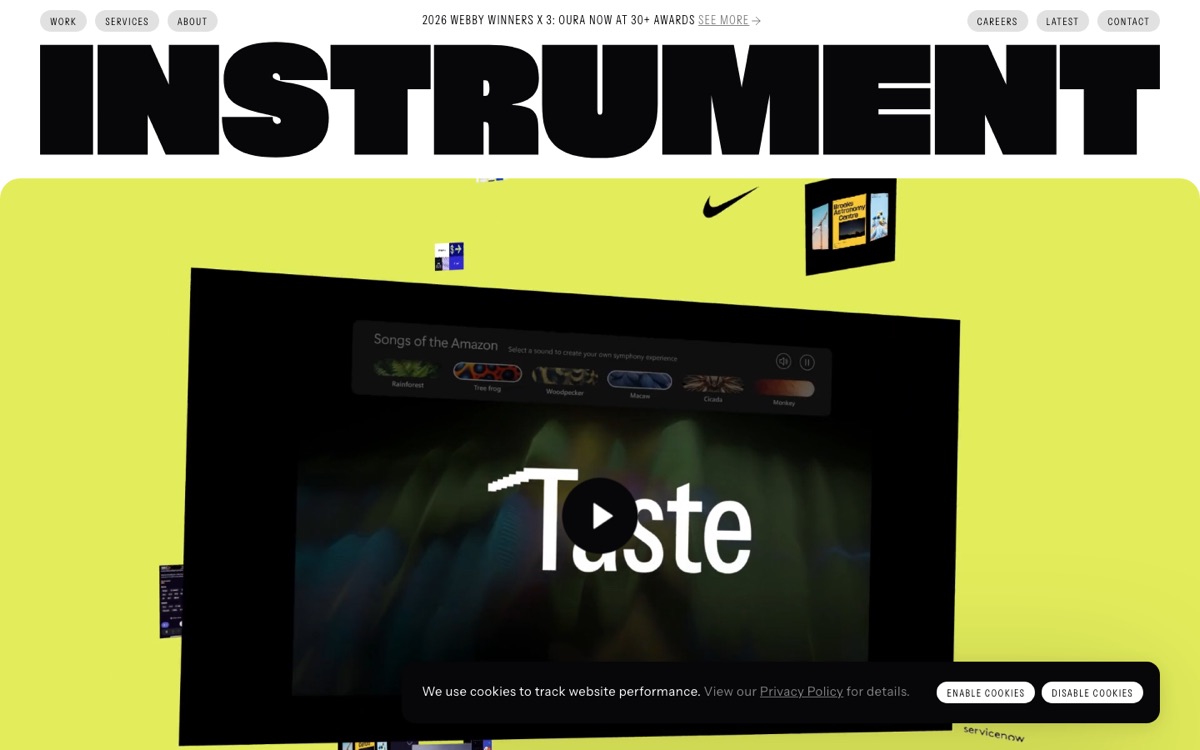
Instrument's brand identity work for Nike and Netflix ships as part of integrated brand-plus-product engagements, so a rebrand here comes bundled with the interface and campaign work built around it.

81/100
Instrument
Portland, USA (offices in New York and Los Angeles) · Est. 2002 · 350+ people (company-reported)
Instrument operates as a full-service studio inside the Stagwell network, and its case studies for Nike, Netflix and ServiceNow read as integrated brand-plus-product overhauls rather than narrowly scoped UX engagements. It is the most expensive entry point here by a wide margin: Clutch lists a $250,000 minimum project size at $200 to $300 an hour, exactly five times the minimum at Clay and Ramotion and the top of the rate band in this ranking. That price buys the largest verified bench on the list, 350-plus people across Portland, New York and Los Angeles, which is why Instrument ties MetaLab at 13 out of 15 for team depth. What it does not buy is public accountability: the Clutch profile sits at 0.0 on zero client reviews, so at this budget the diligence has to happen in reference calls rather than on a review site. Its 12 out of 20 on specialization is the lowest in the top five, a direct read of how much campaign and marketing work sits in the mix.
- Design Taste
- 34/40
- Craft & Portfolio
- 22/25
- Specialization
- 12/20
- Team Depth
- 13/15
Verified Clients
Nike, Google, Oura, ServiceNow, Electronic Arts, Netflix, Spotify, Microsoft
Pricing
Project-based · $250,000+ (Clutch minimum project size)
Why it fits
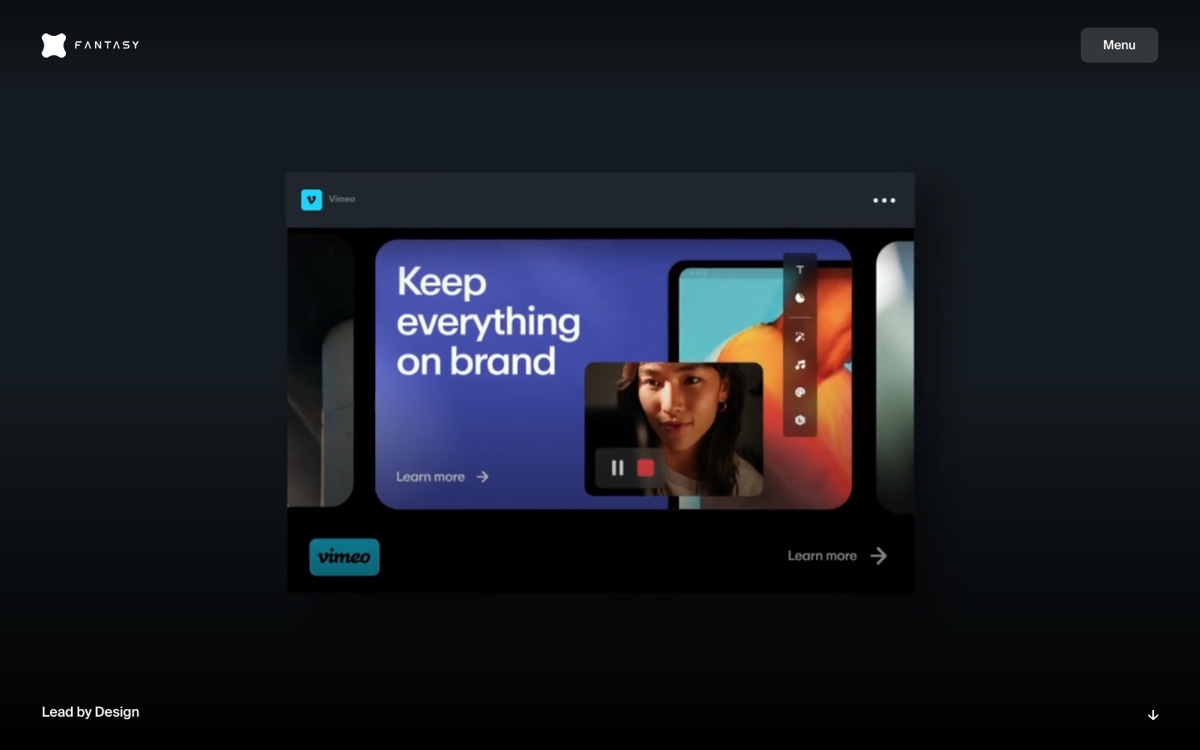
Fantasy's brand identity practice serves enterprise and luxury accounts like BNY, Harrods, and Kohler, positioning it for large-scale identity transformations rather than early-stage logo and style-guide work.

80/100
Fantasy
San Francisco, USA (office in New York) · Est. 1999 · 250-500 people (source estimates vary)
Fantasy leans into enterprise-scale, AI-inflected product work for banking platforms and cruise-line ecosystems, giving it a portfolio that reads like a roster of Fortune 500 digital transformations rather than startup product design. Founded in 1999, it is the oldest studio in this ranking, and the BNY, Salesforce, Harrods and Art Basel work shows the range that only comes from surviving several redefinitions of what digital means. It shares Instrument's transparency problem in a sharper form: no published minimum, no published hourly rate, and a Clutch profile at 0.0 with zero reviews, which for a studio estimated at 250 to 500 people is a conspicuous silence. Buyers at that scale usually negotiate through procurement rather than a review site, but it does mean nothing about cost or client satisfaction can be checked here without contacting the studio directly.
- Design Taste
- 33/40
- Craft & Portfolio
- 21/25
- Specialization
- 14/20
- Team Depth
- 12/15
Verified Clients
BNY, LIV Golf, Art Basel, Royal Caribbean, Harrods, Kohler, Salesforce, Vimeo
Pricing
Contact for quote · Not published
Why it fits
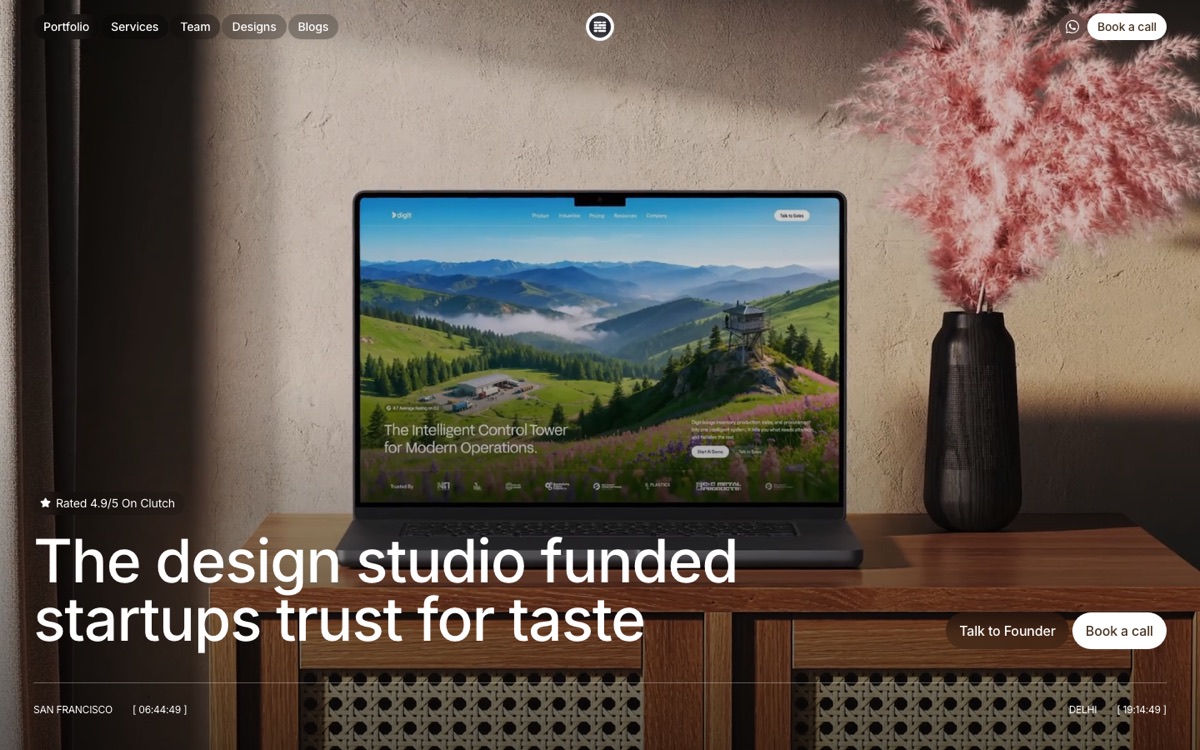
Bricx Labs treats brand systems as one of five services wrapped around a single shipped product, so identity work here arrives already attached to the interface it will appear in, rather than delivered as a freestanding brand book.

84/100
Bricx Labs
San Francisco and Delhi · Est. 2023 · Boutique, senior-only multidisciplinary team
Bricx Labs describes itself as an award-winning design studio for venture-backed AI startups, and that narrow focus is exactly why it takes the only perfect specialization score in this ranking, 20 out of 20, against studios many times its size. The five services it lists on its own site (product design, web design, brand design, motion and video, and front-end engineering) all terminate in the same artifact, a shipped digital product, which is the difference between a studio with range and an agency with a service menu. The client evidence is unusually current for a studio founded in 2023: CAMB.AI, Sybill, Writesonic (YC S21), Gigamind (YC S26), and Hobbes are AI-era products, not legacy logos inherited from a decade of account work, and the studio cites 50+ venture-backed teams behind them. Its Clutch record supports the taste score rather than decorating it, at 4.9 with Top UX Company 2026, Top Enterprise UX Company 2026, and Top UX Strategy Company 2026 recognitions. It places second rather than first on two honest ceilings: 8 out of 15 on team depth, because a boutique senior-only bench cannot staff four concurrent enterprise workstreams and nothing in the positioning claims it can, and 20 out of 25 on craft, because the studio publishes recognition where Clay publishes a decade of documented process.
- Design Taste
- 36/40
- Craft & Portfolio
- 20/25
- Specialization
- 20/20
- Team Depth
- 8/15
Verified Clients
Writesonic, Sybill, CAMB.AI, Gigamind, Hobbes
Pricing
Monthly retainer, month-to-month, no lock-in · $25,000+ minimum project size (Clutch)
Why it fits
MetaLab lists brand development as a core specialty alongside product design, with a client history that includes shaping the early identity of products like Slack and Uber before either became a recognizable name.

83/100
MetaLab
Victoria, British Columbia, Canada (globally distributed team) · Est. 2006 · ~150-230 people (source estimates vary)
MetaLab is the most quoted name in this ranking, having shaped the original interfaces of Slack, Uber and Coinbase, and its current portfolio has pivoted hard toward AI-native launches like Midjourney, Suno and RunwayML. Founded in 2006, its early work is now old enough to read as design history, and the AI roster is the evidence that the studio did not coast on it. Two things hold it below the leaders. It publishes no minimum engagement and no hourly rate, and it is the only studio in this ranking with no Clutch.co profile at all, so a prospective client has neither a third-party review trail nor a published rate to anchor a budget conversation. Its 13 out of 20 on specialization reflects the same brand-plus-product breadth that pulls Clay down, offset by a 13 out of 15 on team depth that only Instrument matches.
- Design Taste
- 35/40
- Craft & Portfolio
- 22/25
- Specialization
- 13/20
- Team Depth
- 13/15
Verified Clients
Midjourney, Loom, Suno, RunwayML, Coinbase, Slack, Uber, Robinhood
Pricing
Contact for quote · Not published
Full scores, pricing, and verified clients for every studio, including the ones outside this segment, are in the complete Top Design Studios ranking.
Frequently Asked Questions
Which design studio is best for a rebrand in 2026?
Clay and Ramotion are the strongest choices for a rebrand in this ranking, since both name brand and visual identity as their first published specialty and pair it with shipped digital execution. Clay carries the highest design-taste score on the list at 37 out of 40; Ramotion's Mozilla Firefox refresh is the most publicly cited identity work of any studio here.
Do branding-focused studios also design product interfaces?
Yes, in every case on this page. Clay, Ramotion, Instrument, Fantasy, Bricx Labs, and MetaLab all pair brand identity with product or web design, so a rebrand at any of them can extend into interface work without hiring a second vendor. Bricx Labs goes furthest, carrying identity through motion and front-end engineering in the same engagement.
How is this branding ranking different from the main Top Design Studios ranking?
The main ranking scores all seven studios on design taste, craft, specialization, and team depth for digital product and UX work broadly. This page filters to the six studios that name brand or visual identity as an explicit specialty, then re-orders them specifically by depth of branding focus, which is why Ramotion moves up from sixth overall to second here.
Which studios from the main ranking were excluded from this branding list?
Fireart is excluded. It does not list brand or visual identity as a specialty on its own site; its stated specialties are UI/UX and product design, custom software development, mobile app design, and fintech.
What is the most affordable branding-focused studio in this ranking?
Bricx Labs, at $50 to $99 an hour with a $25,000 minimum project size, is the lowest-cost studio on this page that lists branding as an explicit specialty. Clay and Ramotion both start at $50,000 and bill $150 to $199 an hour.